guide
Why Are Ruby Rings Expensive? 7 Factors Behind Ruby Pricing
Why are ruby rings expensive? Geological rarity, color grading, origin & carat pricing all drive costs. Explore realistic ruby ring prices for any budget.
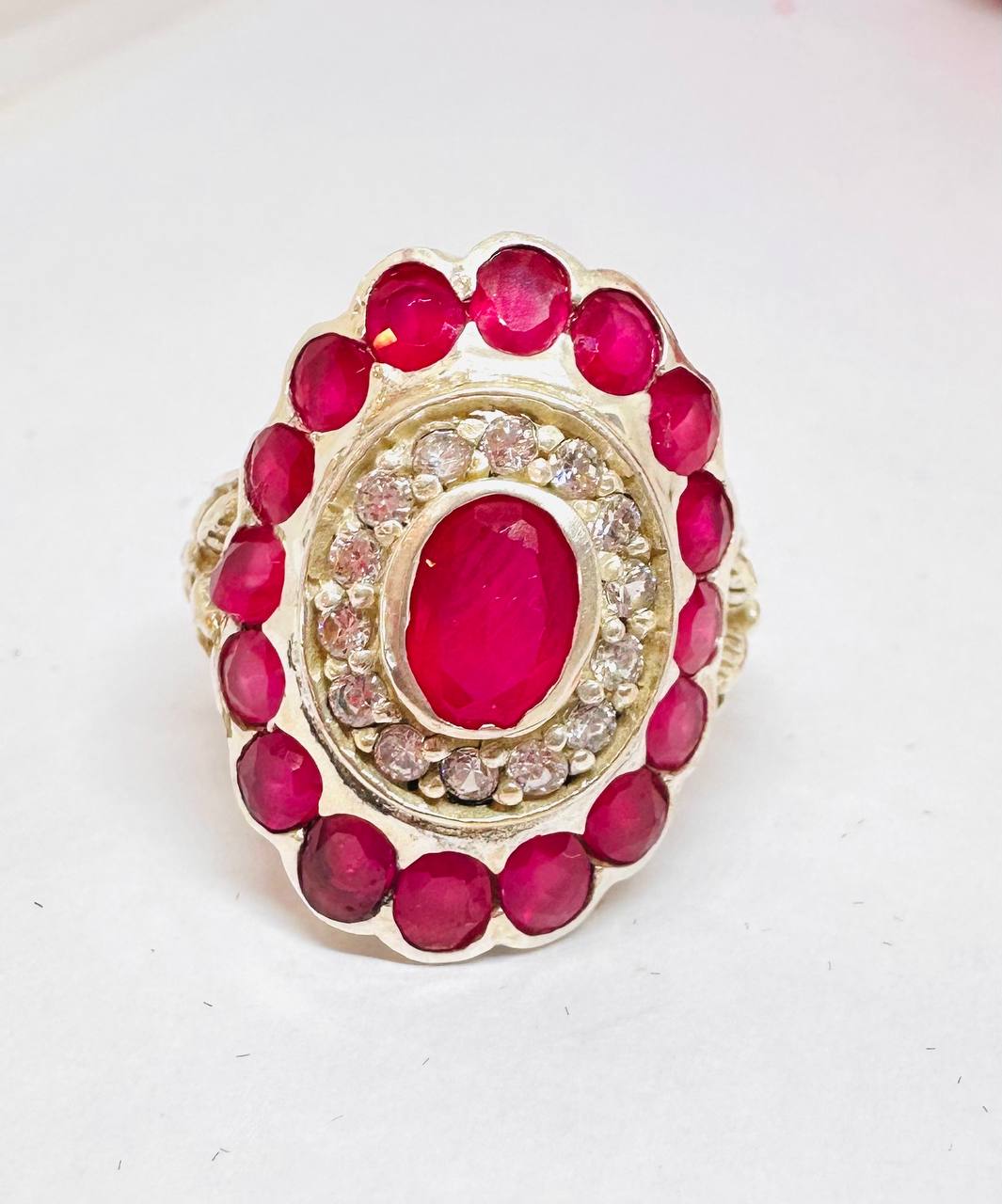
Why Are Ruby Rings Expensive? 7 Factors Behind Ruby Pricing
In short: Ruby rings are expensive because fine natural rubies are geologically rare, color is weighted at roughly 50% of a ruby's value, carat pricing is exponential rather than linear, and origin — especially Burmese — carries massive premiums. This guide walks through all seven factors that determine what you'll actually pay.
You're browsing ruby rings and a question keeps coming up: why are ruby rings expensive? One costs $87, another costs $8,700, and both claim to be "genuine ruby." What gives?
Ruby pricing is surprisingly complex — and, once you understand it, deeply fascinating. Unlike diamonds, where a standardized grading system makes comparison straightforward, ruby valuation involves geology, geography, treatment status, and its standing among the most coveted precious gemstones. This guide breaks down every factor that determines why some ruby rings cost three figures and others cost five.
Why Are Ruby Rings So Expensive? It Starts With Rarity
Let's start with the bedrock truth. Ruby, one of the four classic precious gemstones alongside diamond, sapphire, and emerald, is a variety of the mineral corundum — aluminum oxide, Al₂O₃. Pure corundum is colorless. To become a ruby, the crystal needs chromium atoms to replace some of the aluminum atoms during formation. That's the hard part.
Chromium is geologically scarce in the environments where corundum forms. Even when chromium is present, it creates a structural problem: chromium atoms are slightly larger than aluminum atoms, so they stress the crystal lattice as it grows. The result? Most natural rubies are small and heavily included. A clean natural ruby over one carat is, in gemological terms, an exceptional find.
To put the rarity in perspective: diamond mines produce over 100 million carats annually. All ruby mines combined produce a fraction of that — and the vast majority of what comes out is opaque, low-grade material destined for industrial use or bead-making. Gem-quality ruby production is measured in kilograms, not tons.
This rarity has a practical consequence for durability too. Ruby scores 9 on the Mohs hardness scale, second only to diamond (10) and moissanite (9.25) among gemstones commonly used in jewelry. This hardness is part of why ruby rings hold their value over decades — a ruby ring can be worn daily without the abrasion damage that softer stones inevitably sustain. Among precious colored gemstones commonly set in rings, ruby and sapphire are uniquely hard (Mohs 9), making them ideal for daily wear. Softer stones like emerald, tourmaline, and tanzanite cannot make the same claim without eventual scratching.
Color: 50% of a Ruby's Value
In diamonds, cut quality or carat weight might dominate the price discussion. In rubies, color is king. The most valuable rubies display a vivid, saturated red with a subtle blue undertone — what the trade calls "pigeon blood red," a term historically reserved for the finest Burmese stones.
What affects ruby color? Three things: hue (the basic color — red, purplish-red, orangey-red), saturation (intensity of the color), and tone (lightness to darkness). The sweet spot: a pure red to slightly purplish-red hue, strong saturation, and medium to medium-dark tone. Too light and it's a pink sapphire — same mineral, different market category, and typically a lower price per carat. Too dark and it reads black in dim light, which strips away much of the stone's appeal and market value.
Fluorescence also plays a role many buyers don't see until they wear the ring in sunlight. Burmese rubies in particular exhibit strong red fluorescence under UV light — a property that gives them an almost internal glow in daylight, as if the stone itself is generating light rather than just reflecting it. This fluorescence effect is one of the key reasons Burmese-origin rubies command such extraordinary premiums.
Where the Ruby Was Mined Matters
Ruby origin significantly impacts price, and for good reason — different sources produce recognizably different stones:
- Myanmar (Burma): The gold standard. Burmese rubies typically display that coveted "pigeon blood" red with strong fluorescence, giving them an almost internal glow in sunlight. Political factors, international sanctions, and limited supply have pushed Burmese ruby prices to extraordinary levels.
- Mozambique: The modern powerhouse. Montepuez rubies often have excellent clarity and a slightly darker, more garnet-like red. They've gained tremendous market acceptance and now rival Burmese stones in fine quality.
- Thailand: Thai rubies tend toward a darker, more brownish-red due to higher iron content in the host rock. While historically significant as a mining and trading hub, Thai-mined rubies typically trade at lower per-carat prices than Burmese or top Mozambican material.
- Sri Lanka, Madagascar, Tanzania: All produce commercial-quality rubies, often lighter in color or with noticeable purple modifiers.
At our handcrafted ruby ring collection, our Bangkok artisans work primarily with Thai and Burmese-source natural rubies — stones that carry the character of their origin while remaining accessible to collectors who value authenticity over certification paperwork.
Clarity: Inclusions Are (Usually) Your Friend
Here's a ruby paradox: inclusions lower clarity grade but can prove authenticity. Natural rubies virtually always have inclusions — rutile silk, crystal inclusions, color zoning, and fingerprint-like healed fractures are normal and expected. A completely flawless ruby should raise suspicion — natural rubies of that clarity are so rare they're virtually nonexistent in commercial jewelry.
In fact, some inclusions are desirable. Fine rutile silk (microscopic needle-like crystals of titanium dioxide) can create a soft, velvety appearance that diffuses light beautifully through the stone. When oriented correctly and dense enough, these inclusions can produce asterism — the six-rayed star effect in star rubies.
The inclusions that actually hurt value: dark mineral crystals visible to the naked eye, large fractures that reach the surface (durability risk), and cloudy or milky areas that deaden the stone's brilliance.
Carat Weight: The Exponential Curve
Ruby pricing is not linear. A two-carat fine ruby is not twice the price of a one-carat — it can be five to ten times more. The reason goes back to geological scarcity: as size increases, the probability of finding a clean, well-colored crystal drops off a cliff.
In practical terms: a natural ruby ring with a 0.5-carat center stone of good color might cost $200-$500 in silver. Jump to 1 carat, and you're looking at $800-$3,000 for equivalent quality. At 2+ carats with top color and no heat treatment, prices enter five and six-figure territory — and such stones almost never appear in commercial jewelry; they go to auction.
This exponential pricing also explains why ruby has become a meaningful choice for engagement rings. A 1-carat natural ruby of fine color in a solid gold setting delivers presence and rarity at a price that, while substantial, often costs less than a comparable diamond — not as a compromise, but as a deliberate choice for someone who values color and individuality.
Ruby engagement rings have a long royal pedigree: Princess Mary of Denmark's engagement ring features ruby side stones flanking a central diamond—their red-and-white design evoking the Danish flag. Queen Elizabeth II's Burmese Ruby Tiara remains one of the most significant ruby pieces in any royal collection, and the British crown holds several major ruby jewels. Beyond royalty, ruby is the July birthstone, which adds an emotional dimension for summer-born wearers — a ruby ring isn't just jewelry, it's a meaningful personal talisman. For more on choosing colored stones for commitment rings, see our guide to alternative engagement ring gemstones.
Treatments: What's Been Done to the Stone
This is where smart buyers pay attention. Ruby treatments exist on a spectrum from "completely accepted" to "avoid at all costs." Quick buyer's rule: heat treatment is standard and accepted. Anything involving glass filling or chemical diffusion — walk away.
Heat Treatment (Accepted)
Heating rubies to 1200-1800°C dissolves rutile silk, improving clarity and sometimes enhancing color. This practice dates back centuries and is considered standard. An estimated 95% of commercial rubies undergo some form of heat treatment. GIA and other labs note it on reports, but it does not disqualify a ruby from being "natural."
Flux Healing (Borderline)
Heating with a flux material (like borax) that fills surface-reaching fractures. Can improve apparent clarity but introduces foreign material into the stone. Disclosure is essential; some buyers accept minor flux healing in commercial-grade stones.
Lead-Glass Filling (Avoid)
A heavily fractured, low-grade ruby is heated with lead glass, which fills cracks and can constitute a quarter to half of the finished stone's weight. These "composite rubies" are fragile — the glass can fall out during routine jewelry cleaning or resizing, which is why understanding how to care for your gemstone jewelry matters. They should be dramatically cheaper (under $20 per carat) and always disclosed. Unfortunately, they often aren't.
Beryllium Diffusion (Avoid)
A treatment that diffuses beryllium into the surface of the stone to alter or enhance color. The color is only surface-deep and can be damaged by repolishing. This treatment should always be disclosed.
Every piece in our ruby ring collection uses natural, heat-only (or completely untreated) stones. In our Bangkok studio, each stone is hand-selected by an artisan who examines it under natural light — the same light you'll wear it in. We never use glass-filled or diffusion-treated material, because a ring meant to be worn for decades needs a stone that can actually last decades.
How to Verify What You're Buying: Ruby Certificates
When you're spending hundreds or thousands on a ruby ring, documentation matters. Several major gemological laboratories issue ruby grading reports. Learning to read one is worth the effort — a good gemstone certification guide can save you from costly mistakes.
- GIA (Gemological Institute of America): The most widely recognized. A GIA report confirms natural vs. synthetic origin, heat treatment status, and basic color/clarity descriptions. GIA does not issue numeric color grades for colored stones, but their origin and treatment determinations are the industry benchmark.
- GRS (GemResearch Swisslab): Dominant in the Asian and European colored stone markets. GRS reports include "pigeon blood red" color designations for qualifying stones, which significantly impacts pricing.
- Lotus Gemology: Bangkok-based, highly respected for ruby and sapphire reports with detailed origin analysis. Their color grading system is especially thorough for Thai and Burmese-source stones.
- AGL (American Gemological Laboratories): Known for the "Prestige Report," a detailed colored stone analysis preferred by U.S. auction houses and high-end retailers.
A certificate doesn't change the stone — but it verifies what you're paying for. For any ruby ring over $1,000, a lab report from a recognized laboratory should be considered essential. For unheated rubies, certification is virtually mandatory, as the premium for no-heat stones is substantial enough to attract fraud.
Cut: The Silent Value Factor
Unlike diamonds — where "Ideal Cut" and "Excellent Cut" are precisely defined — ruby cutting is more art than science. Cutters face a dilemma: maximize carat weight (cutting shallow to keep the stone large) or maximize beauty (cutting to proportions that return light brilliantly).
In ruby's source countries, cutters often prioritize weight retention because rough is so expensive. The result: stones with "windows" (see-through areas in the center caused by shallow pavilion angles) or uneven facets. You can test for a window yourself — hold the ring over printed text. If you can read through the center of the stone, the cut is too shallow and you're losing brilliance where it matters most.
A well-cut ruby — one with good symmetry, no window, and lively brilliance — commands a premium because it represents a cutter who chose beauty over weight. In cutting hubs like Chanthaburi, Thailand, experienced lapidaries often spend hours studying a piece of rough before making the first cut, calculating how to orient the crystal for maximum color return. That human judgment is part of what you pay for in a fine ruby ring.
At our ruby ring collection, our Bangkok-based setters examine each finished stone under multiple light sources before it ever touches a setting — a final quality gate that ensures the ruby you receive looks as alive on your hand as it did in the cutting studio.
So What Should You Actually Pay?
Here's a realistic guide for natural ruby rings in today's market:
- $80-$150: Sterling silver setting, smaller natural ruby (0.3-0.8 carat), likely Thai or African origin, heat-treated, visibly included but attractive color. Perfect for everyday wear and first-time ruby buyers.
- $150-$400: Better silver or gold-vermeil setting, larger or better-colored ruby, possibly with diamond/CZ accents. The sweet spot for quality without breaking the bank.
- $400-$1,500: Solid gold setting (9K-14K), ruby approaching or exceeding 1 carat with good color, may include lab certification. These are serious heirloom pieces meant to last generations. Many ruby engagement rings fall in this range.
- $1,500-$10,000: Fine gold or platinum setting, ruby over 1 carat with excellent color and clarity, possibly unheated, with GIA or GRS certification. Investment-grade jewelry.
- $10,000+: Auction-level stones — Burmese origin, "pigeon blood" color, unheated, over 2 carats, exceptional clarity. These are rare even at the world's top jewelers.
- By contrast: Lab-created ruby rings typically range from $40-$150 regardless of stone size, since synthetic ruby rough is inexpensive and unlimited. The entire price is in the metal and labor — the stone itself has no scarcity value.
Why Are Ruby Rings Expensive: The Bottom Line
A ruby ring's price tag is the sum of its geology, its geography, and the choices made by every human who touched it — from the miner in Mozambique to the cutter in Chanthaburi to the setter in Bangkok. Understanding these factors doesn't just make you a smarter buyer; it deepens your appreciation for what you're wearing.
When you choose a natural ruby ring, you're not buying a commodity. You're choosing a specific crystal that formed under specific conditions in a specific place millions of years ago. No two are alike, and each one is truly one of a kind. That's either a limitation or a virtue, depending on your expectations — at our handcrafted gemstone collection, we've always considered it the entire point.
Written by the Halo Jewelry team in Bangkok, where we hand-select every natural ruby that enters our collection. Our gemologists evaluate each stone for color, clarity, and origin before it reaches the jeweler's bench.